
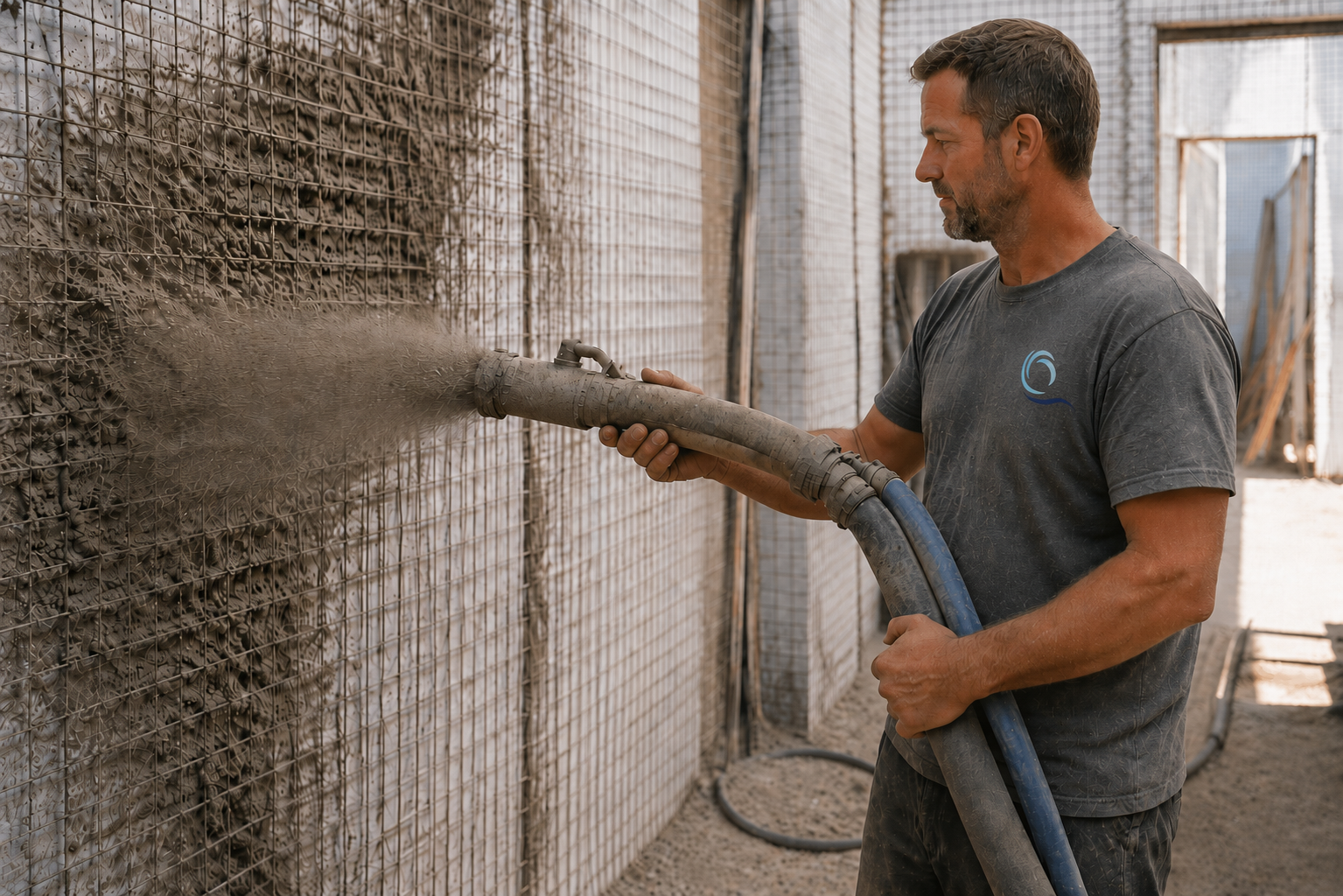


Step 1: Engineered Panels
Each SCIP panel is a steel-welded wire mesh cage surrounding an EPS insulation core, engineered and precut for your exact home or building design.


SCIP (Structural Concrete Insulated Panel) is a composite building system: an EPS insulation core enclosed in welded wire mesh, reinforced with impact microcolumns, and finished on both faces with structural mortar. The cured assembly forms a monolithic 4,000-psi concrete shell — walls, floors, and roof as one continuous structure — with engineer-stamped whole-envelope wind ratings of 180–200 mph. Recognized under ICC-ES ESR-5623 and Florida Product Approval #FL46983. Built in Florida and South Carolina by BeachLife Development, licensed general contractor FL CGC1537441.
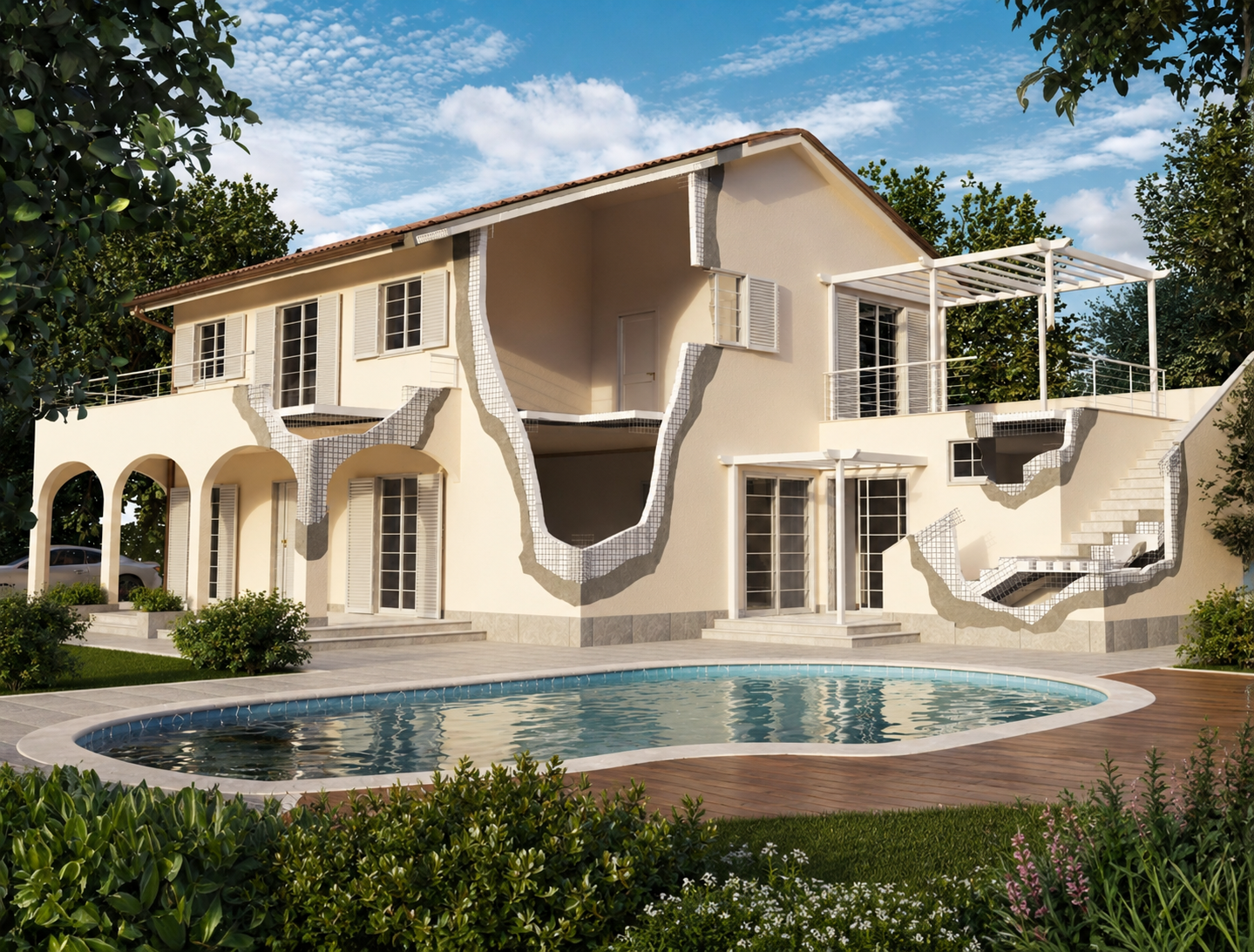


Each SCIP panel is a steel-welded wire mesh cage surrounding an EPS insulation core, engineered and precut for your exact home or building design.

Lightweight panels are assembled on site in a fraction of the time framing takes, forming walls, floors, roof, and stairwells as one integrated system.

High-strength shotcrete is applied to both faces, curing into a monolithic 4,000-psi shell with engineer-stamped whole-envelope ratings of 180–200 mph — roof included, unlike truss-roofed block construction.
"We're not just rebuilding our home — we're building a sanctuary. BeachLife is making it possible to stay on our waterfront lot and live free from the fear of destruction." — Richard S., Redington Beach Homeowner
Every performance claim on this page traces to a published standard, evaluation report, or laboratory test. Panels are produced under ICC-approved AC15 factory quality control with continuous ISO-accredited third-party inspection.
| Category | Standard / Test | Result |
|---|---|---|
| Structural | ICC-ES ESR-5623, designed per ACI 318 / AC15 | Approved as structural walls, floors, and roofs |
| State approval | Florida Product Approval #FL46983 | Approved for Florida use per approval scope |
| Wind (system) | ASCE 7 design per ESR-5623 | Permitted in wind-designed structures |
| Wind (as built) | Project-specific stamped engineering | 180–200 mph whole-envelope rating, roof included |
| Debris impact | Texas Tech missile testing | Impacts to 90 mph — ≈225 mph hurricane conditions, depending on panel thickness |
| Seismic | ESR-5623 | Seismic Design Categories A–B; higher via project engineering |
| Fire | ASTM E119 (assembly); IBC 2603 (EPS core) | 1-hour rated wall and roof assemblies |
| Thermal | ASTM C578; R-values per ESR-5623 | R-value scales with core thickness |
| Acoustic | Laboratory tested, standard finish | Rw ≈ 37 dB; increases with core thickness |
| Quality control | AC15 ICC-approved factory QC | Continuous ISO-accredited third-party inspection |

Documented figures from evaluation reports, laboratory testing, and stamped project engineering.
Compare SCIP with concrete block, ICF, and wood framing — installation speed, insurability, hurricane resistance, and long-term maintenance.
| Conventional CMU | BeachLife SCIP | |
|---|---|---|
| Walls | CMU block + wood-framed 2nd floor | Monolithic 4,000-psi concrete |
| Roof | Wood or metal trusses · 130–140 mph | Monolithic concrete · 180–200 mph |
| Whole-envelope rating | Walls only | 180–200 mph including roof |
| MEP | Standard | Standard |
| Build time | ~24 months | 12–15 months |
The truss line — where a block home switches to a wood roof — is the failure point SCIP eliminates: walls and roof pour as one continuous shell. Sources: FEMA field study on SCIP performance in Hurricane Ike; ICC-ES ESR-5623; Texas Tech missile testing; ASTM E119 assembly testing.
SCIP technology has been used in construction since the late 1960s, with tens of thousands of structures built worldwide and no documented structural failures reported in industry literature — even on projects with poor workmanship. Structurally, a SCIP wall functions like reinforced concrete while insulating better than a fully insulated stud wall, because the continuous EPS core has no studs interrupting it and the interior concrete face adds thermal mass on the conditioned side.
Case study — Hurricane Ike, Crystal Beach, TX (2008): a SCIP house built on an engineered foundation took a direct hit from Hurricane Ike and survived with less damage than any other surviving structure in the area — including withstanding a collision from a neighboring house that washed off its foundation. Most surrounding wood-frame homes were reduced to bare pilings. The performance is documented in the FEMA field study linked on this page.
Everything you need to know before building with Structural Concrete Insulated Panels.
Most BeachLife SCIP homes are completed in about 9 months — precut panels assemble faster than traditional construction, depending on site conditions and permitting.


A slightly higher upfront cost per square foot, repaid through up to 70% lower energy bills, minimal maintenance, and insurance savings.
Our team guides you from soil testing and structural engineering through permitting, construction, and your Certificate of Occupancy.
Lorem ipsum dolor sit amet, consectetur adipiscing elit. Suspendisse varius enim in eros elementum tristique.

JFK - 260KM
LAX - 160KM
ANC - 460KM
FLG - 260KM
FYV - 560KM
JFK - 260KM
LAX - 760KM
ANC - 130KM
FLG - 260KM
FYV - 960KM
Reach us by car - More Info here
Gojo taxi service - More Info here
California (CA) - Kyoto (JP)
*Recommended Route
New York (NYC) - Kyoto (JP)
*Secondary Route
Reach us by car - More Info here
Gojo taxi service - More Info here
Visit the BeachLife Center in Largo to see SCIP panels up close, or call 877-321-4253 to schedule a consultation with our design and engineering team.